

CLIENT Restoration Directorate, Malta
ARCHITECTURE Ipostudio, EMDP, Hermann Bonnici
STRUCTURE aei progetti
MEP b.NEL
DESIGN 2017- 2018
REALIZATION 2020-2024
ROOF AREA 2.500 sqm
TOTAL COST 9 mio €
STRUCTURE COST 3,9 mio €
PHOTOS Pietro Savorelli, aei progetti
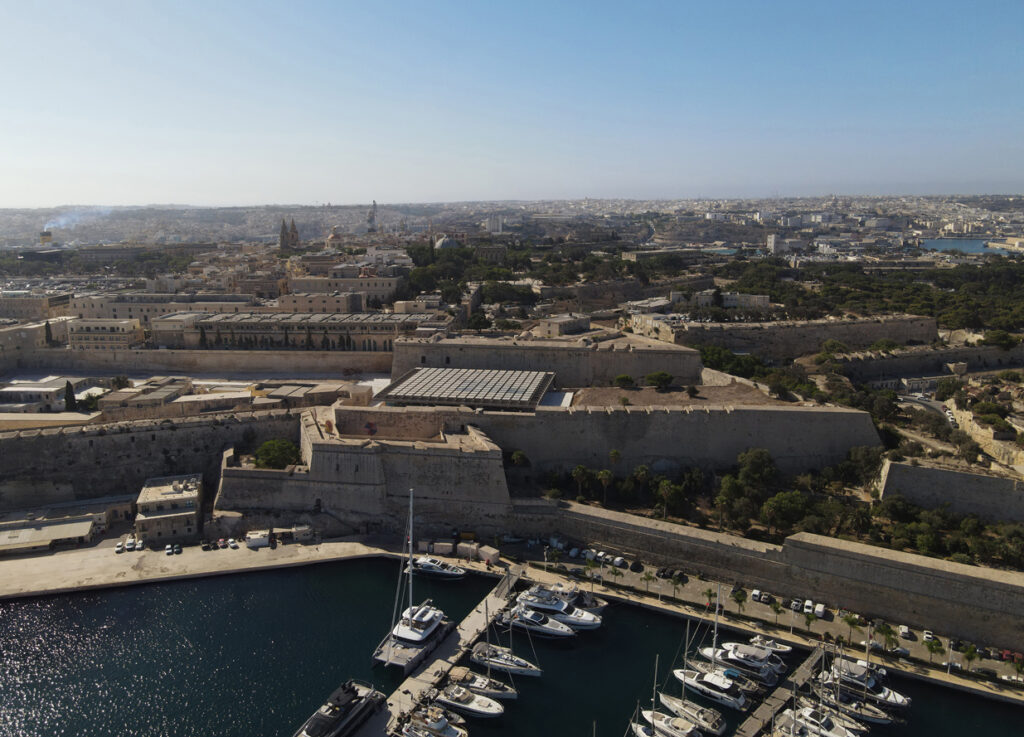
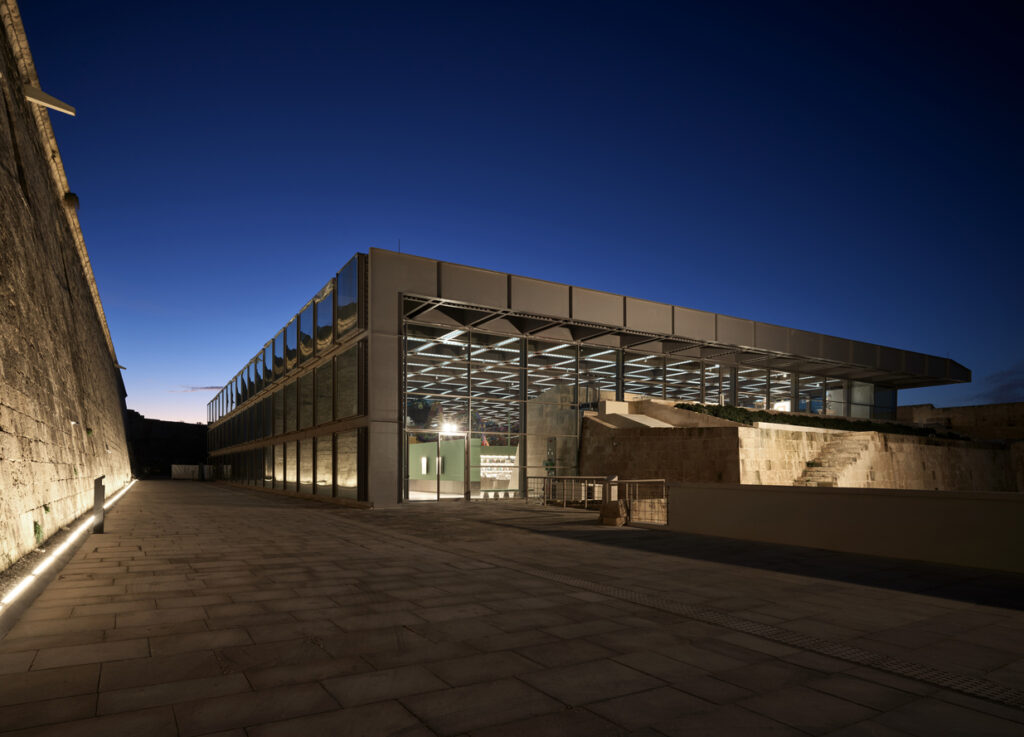
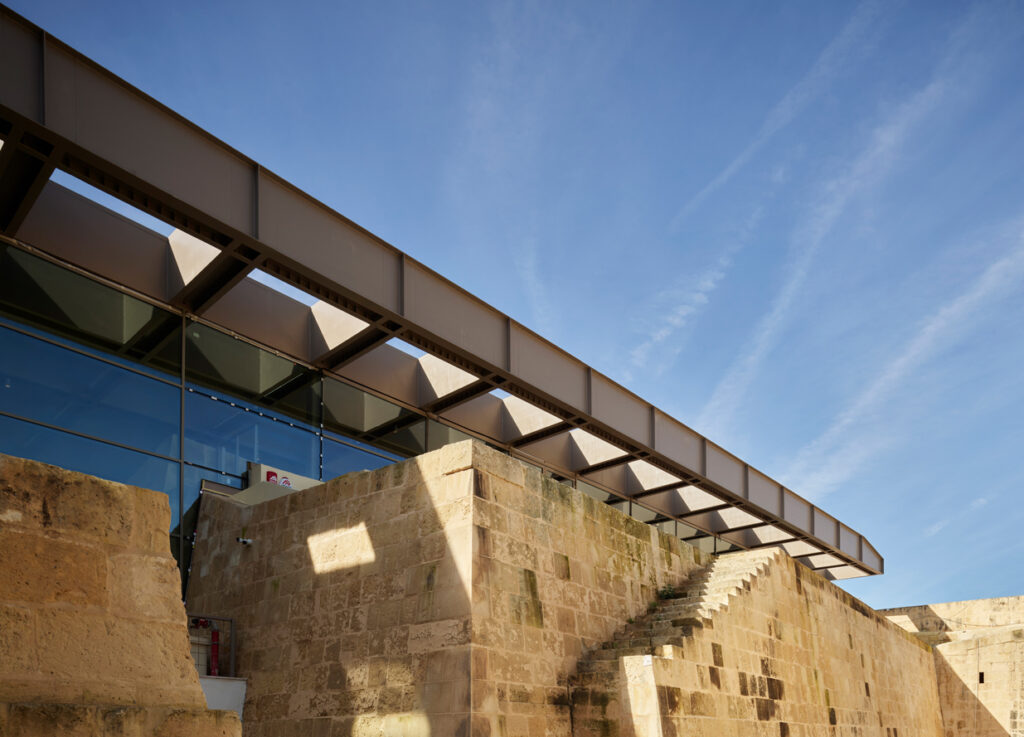
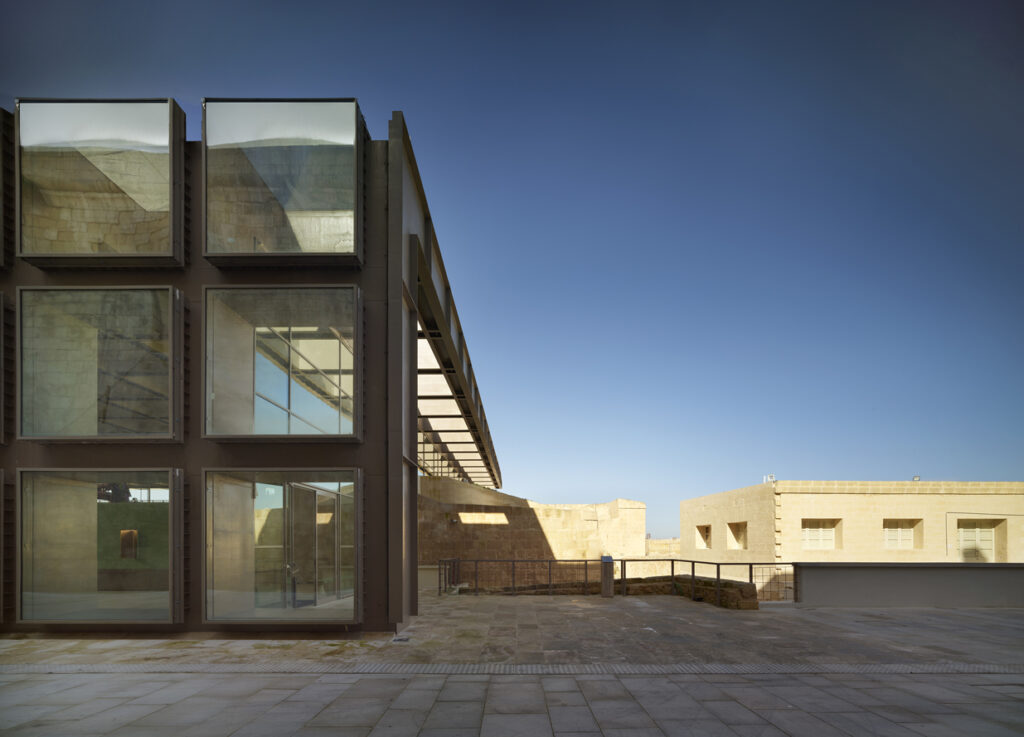
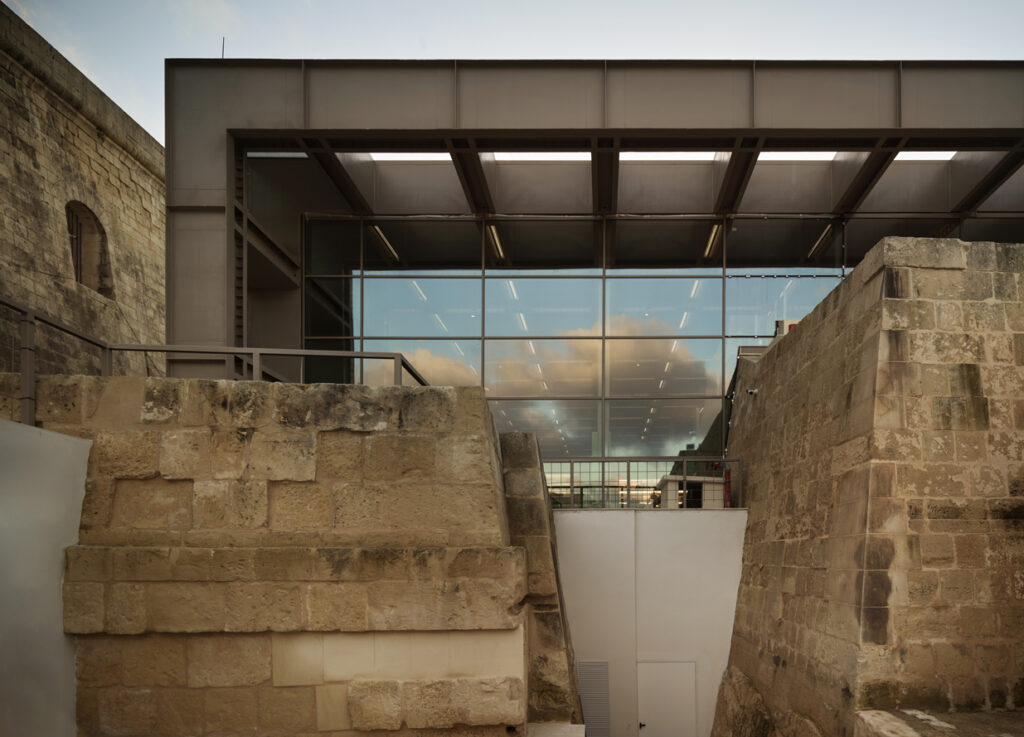
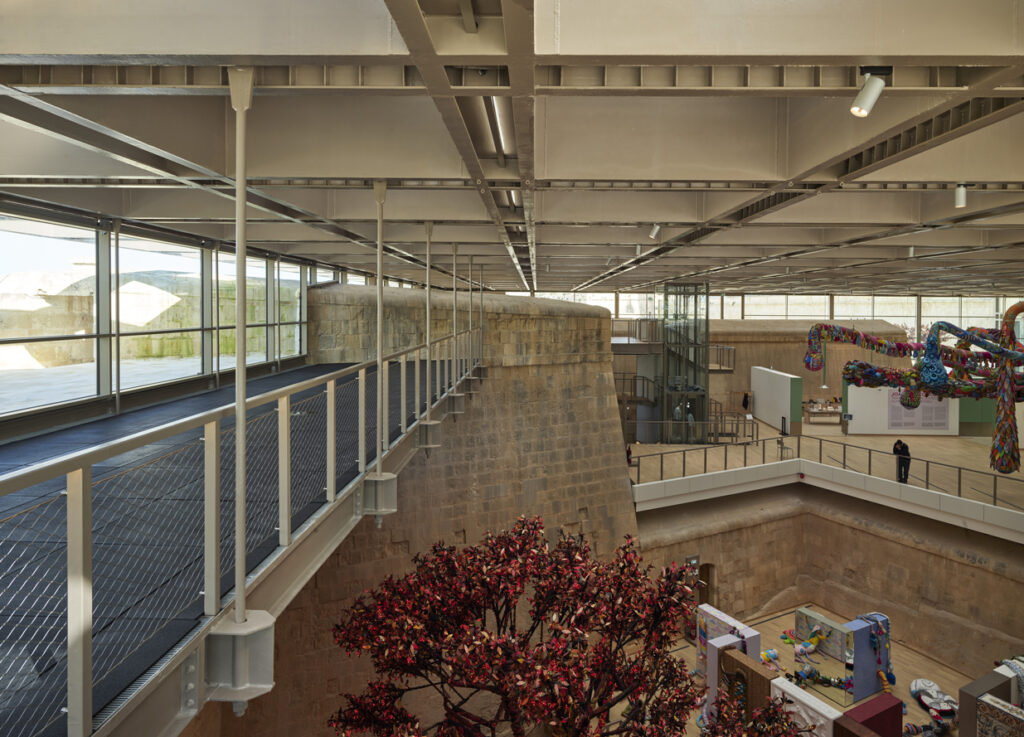
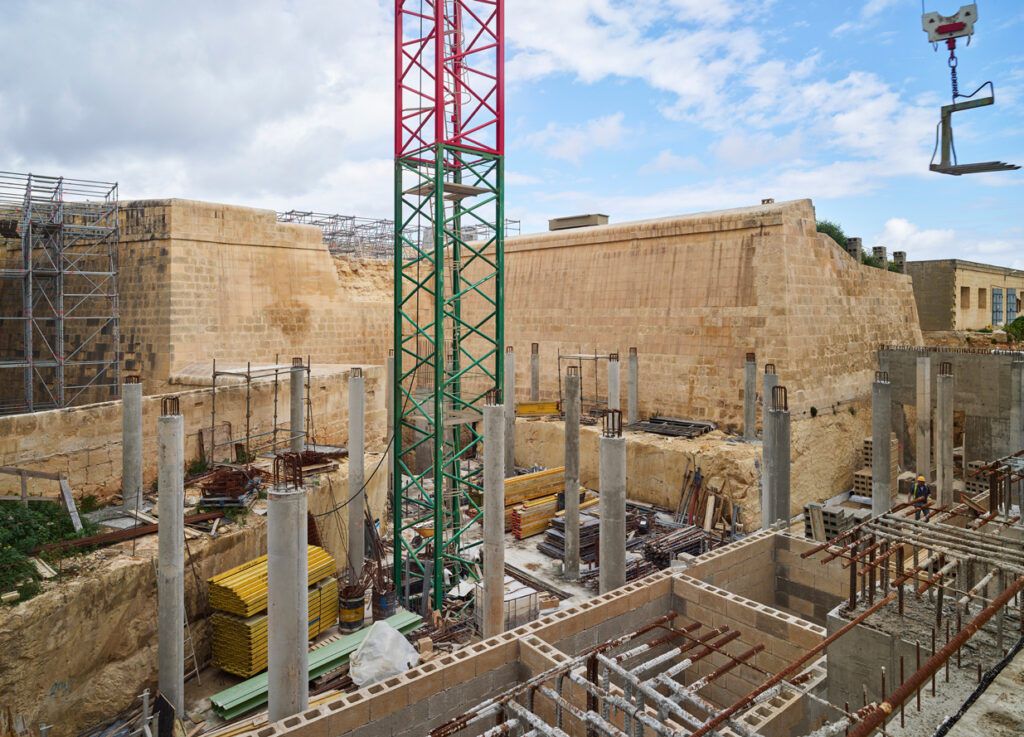
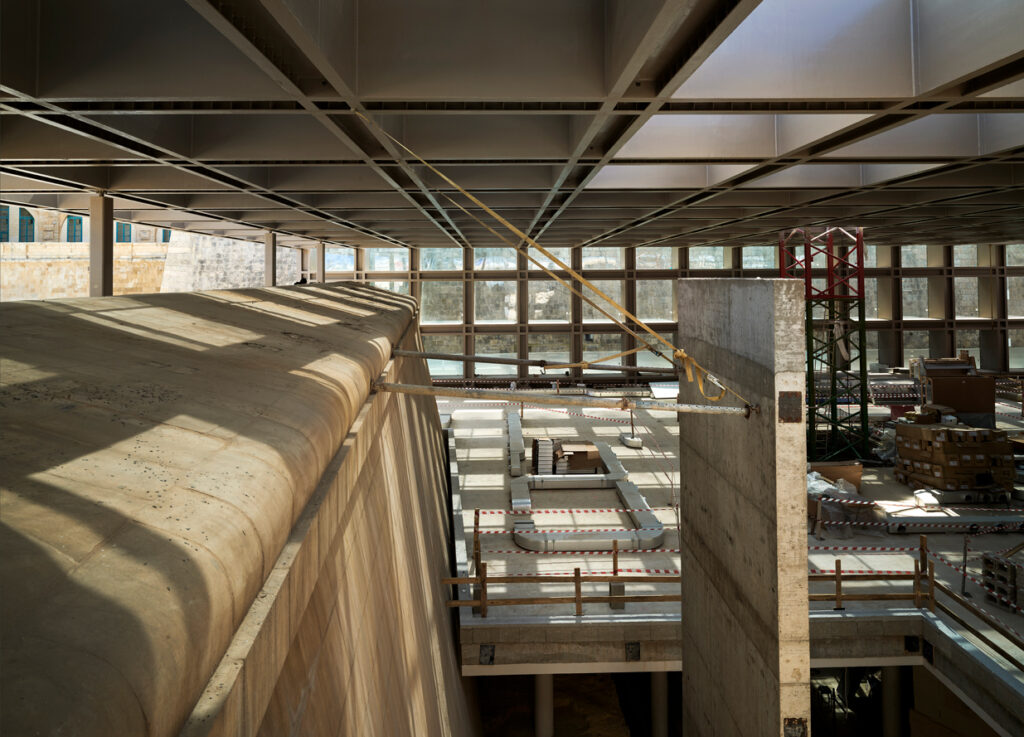
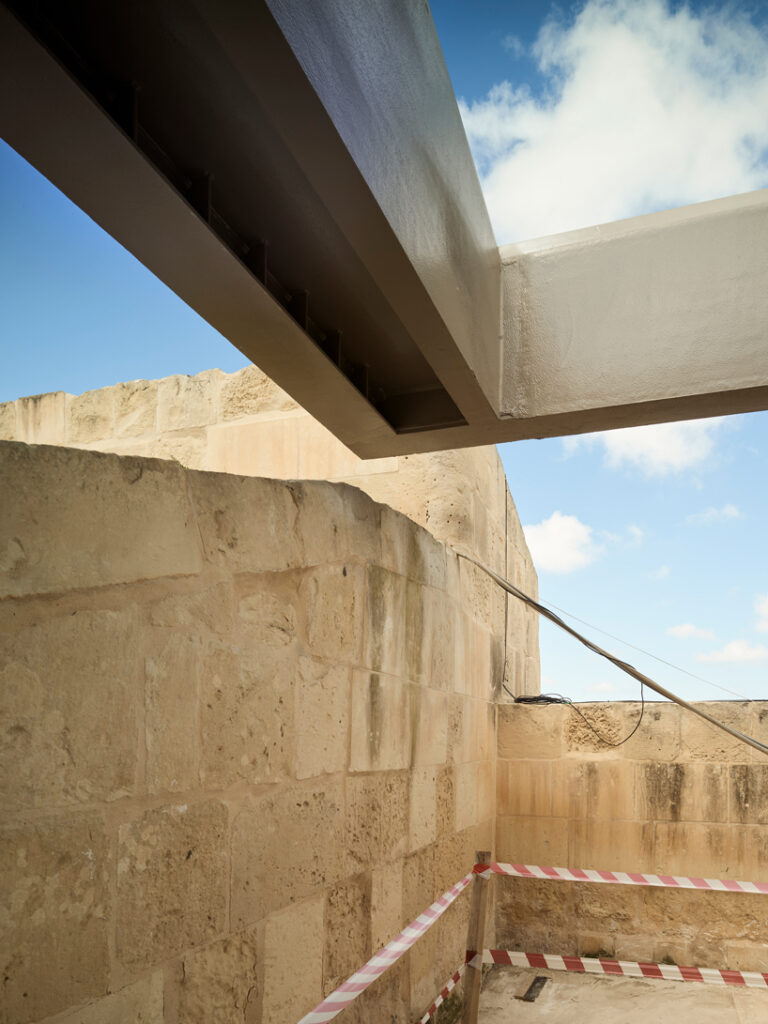
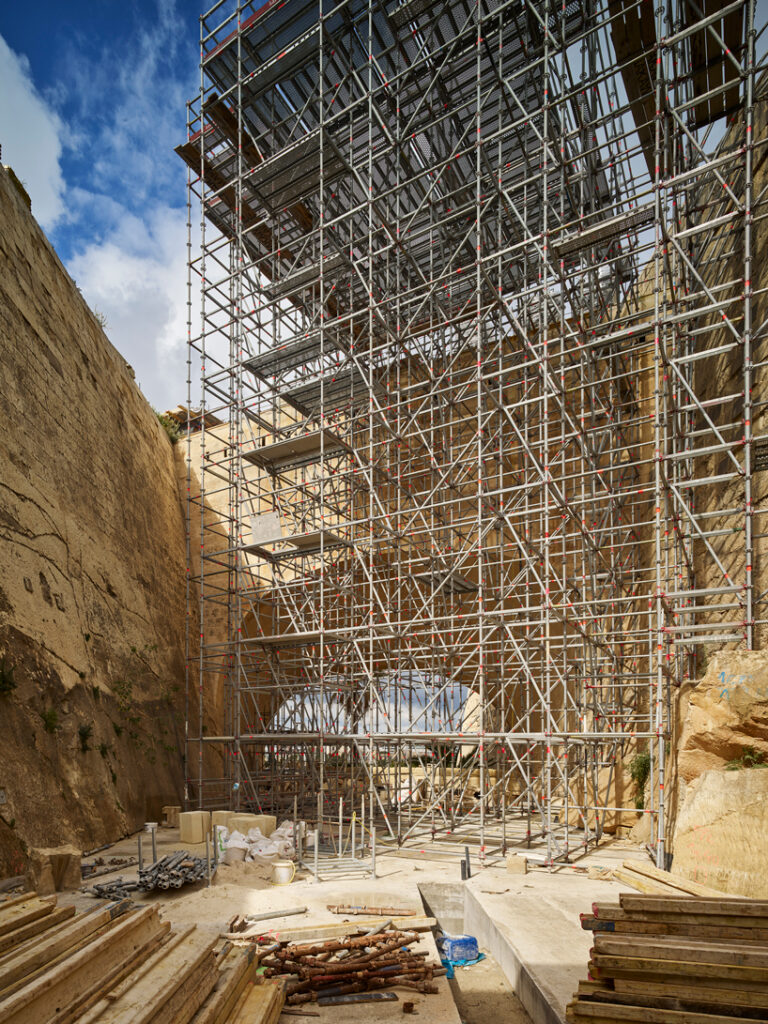
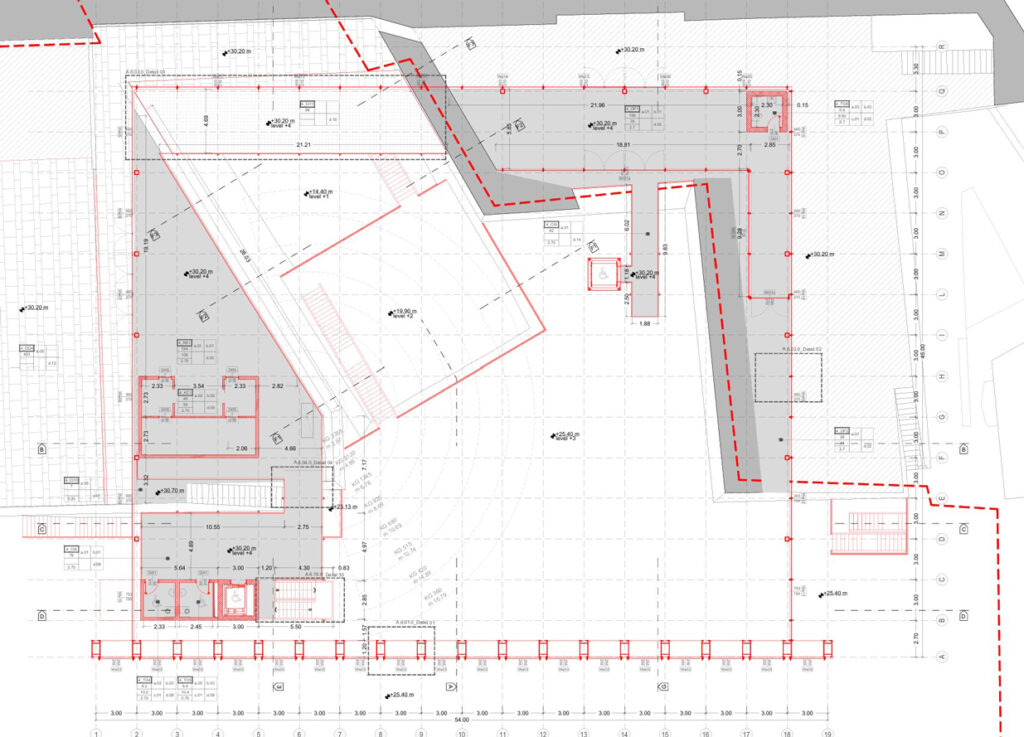
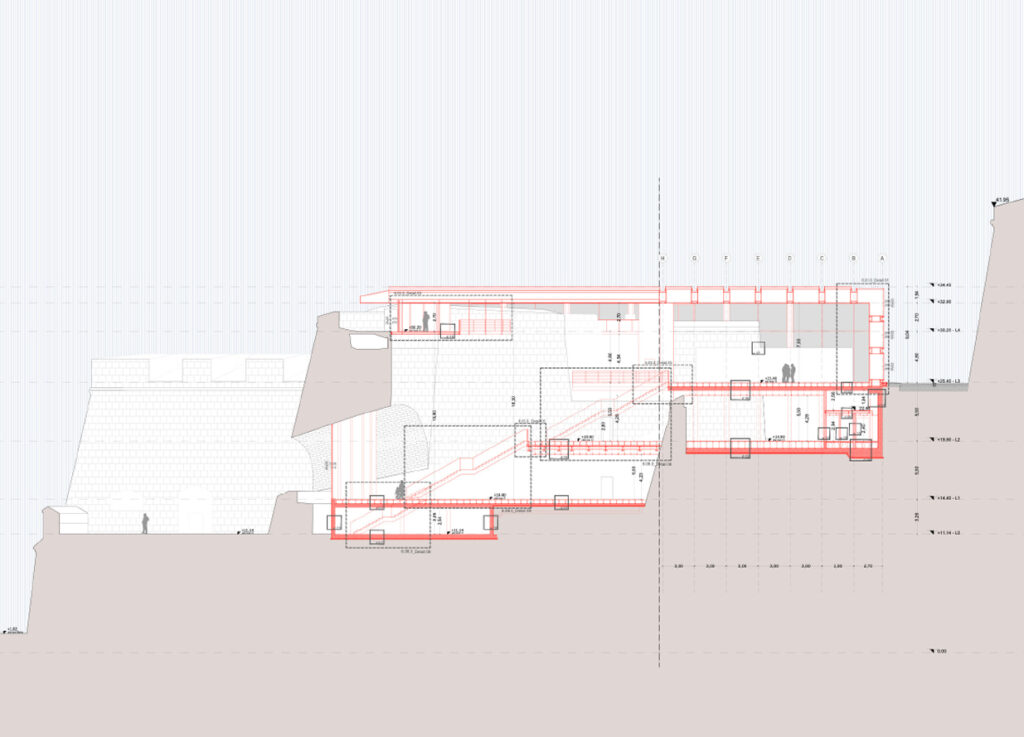
The museum stands on the bastions of San Salvatore, structured into various terraces, partly carved into the rock, partly constructed with large blocks of the same rock. The new building is grafted onto the site through contrast: not stone, but steel and glass embody a form of ideogrammatic simplicity. A gigantic inverted steel L creates a glass case that encloses the project area, protecting and enhancing it.
The utmost simplicity of the image is the result of complex design processes, which required constant technical and construction expertise, combined with subtle optical corrections that guide the eye and deceive perception.
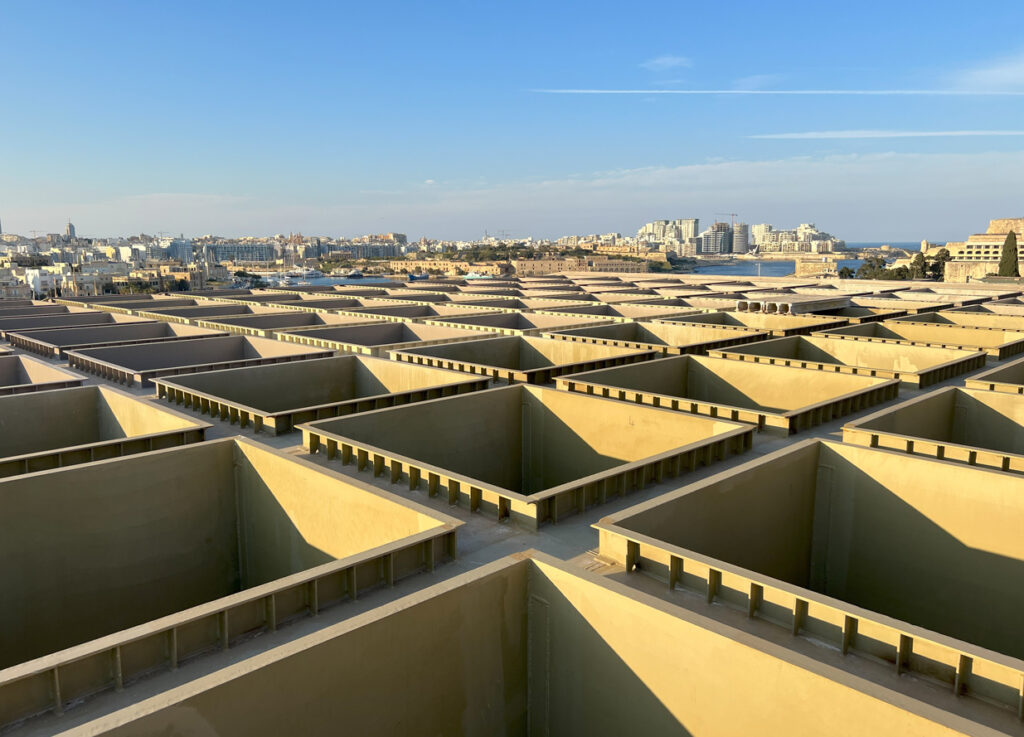
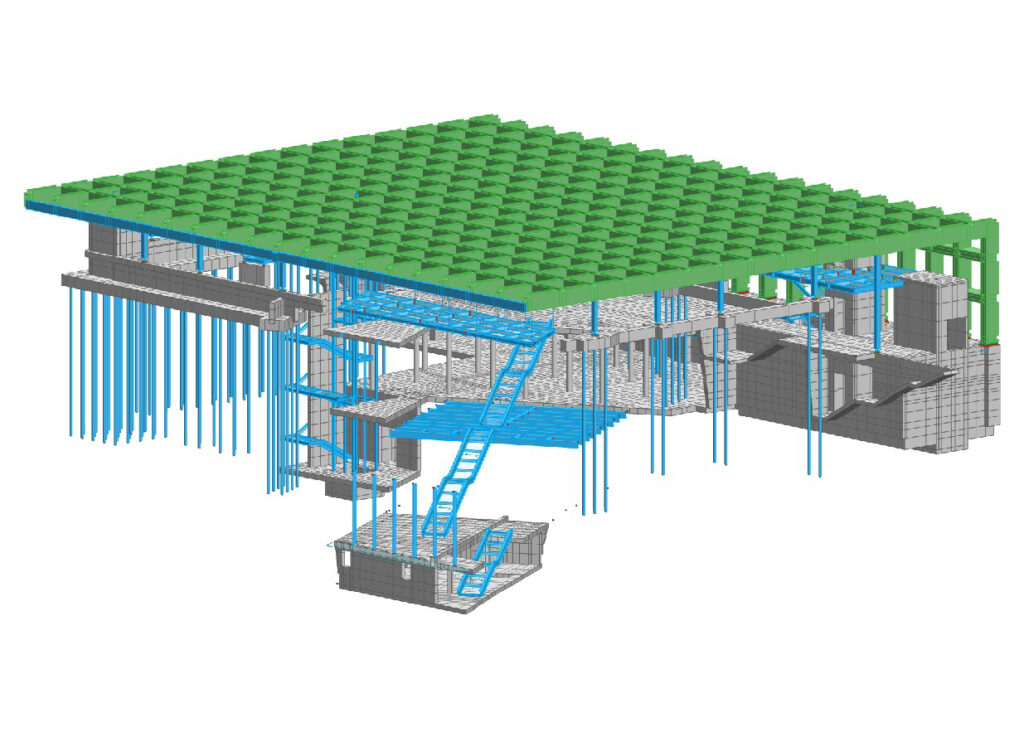
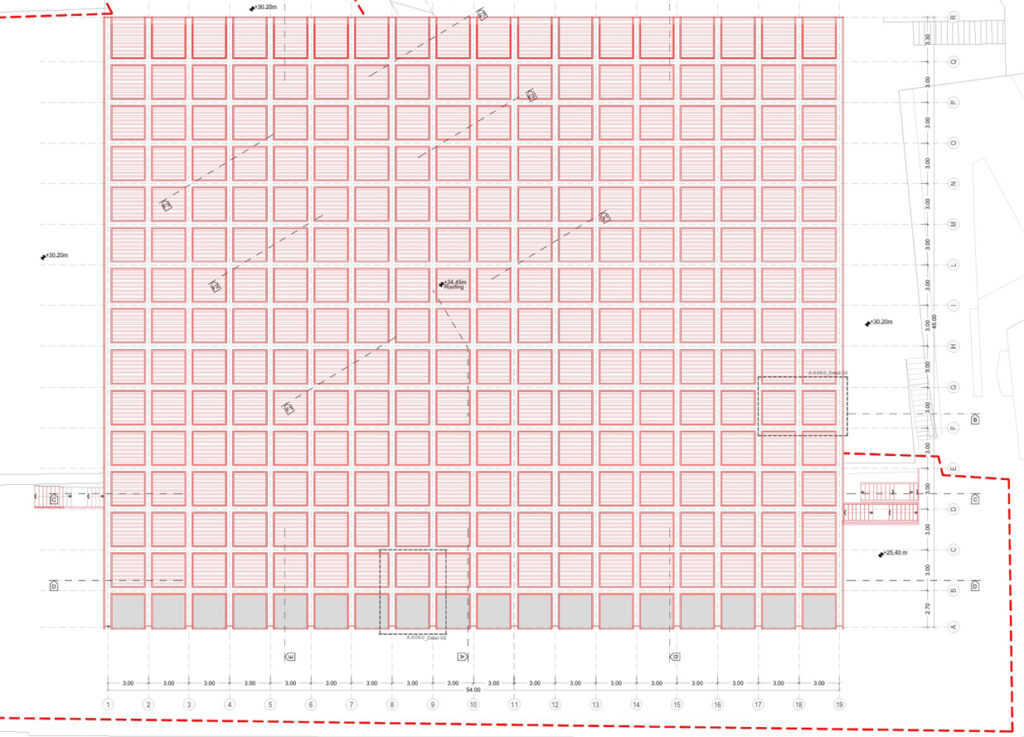
The entire covered surface, measuring 55×45 m, devoid of vertical supports, is configured by a 3×3 m Cartesian grid, which forms a
coffered structure of steel beams and which only folds vertically on the southeast elevation, where it becomes the façade. Along the other three sides of the roof, the pillars are arranged in a seemingly random fashion. The complexity of the context not only requires the pillars to be placed at variable heights, but also requires that they not weigh on the network of tunnels beneath the bastions or on the great Santa Barbara arch.
The roofing structure is made of beams of the same external dimensions, with an H-section, 60 cm wide and 120 cm high, assembled from welded plates with thicknesses ranging from 12 to 40 mm, in relation to the extreme variability of the stresses they must withstand. Therefore, the beams are only apparently identical.
All the segments forming the roof were joined on site, always using welding to avoid compromising the accuracy of the structural elements, which, uncovered and hidden, become the protagonists of the architecture themselves.
To assemble the ashlars on site, a substructure of metal tubes was built to provide temporary support for the 304 nodes of the grid.
To appreciate the contrast between the clean, essential architectural image and the structural and construction complexity, consider that the roof flexes elastically under the action of loads, developing sags of up to 20 cm.
The design idea of creating a flat surface was therefore realized through a further deception: what was built was in fact a pavilion vault, albeit extremely low, with curvatures commensurate with the sags it would have suffered under the action of permanent loads.